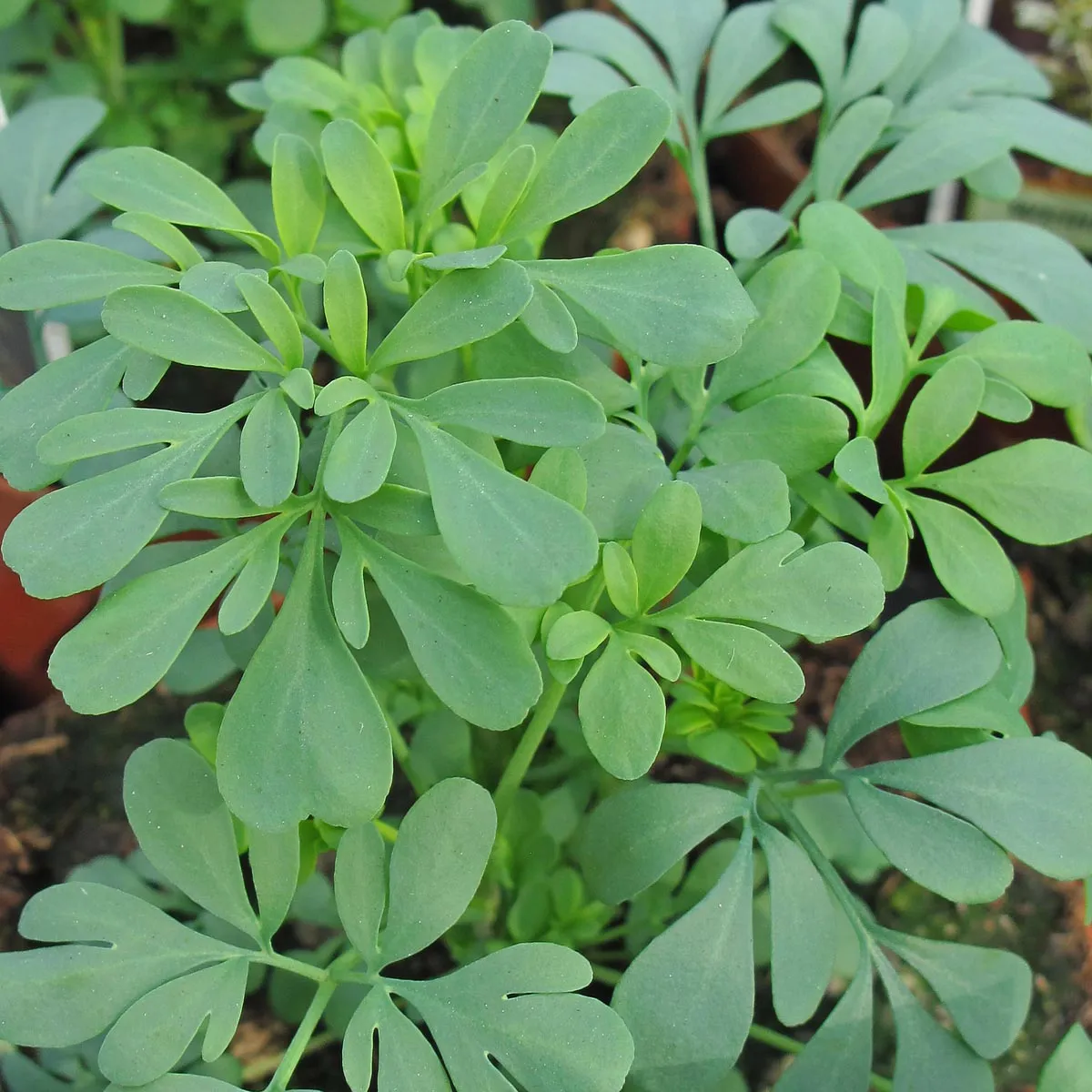
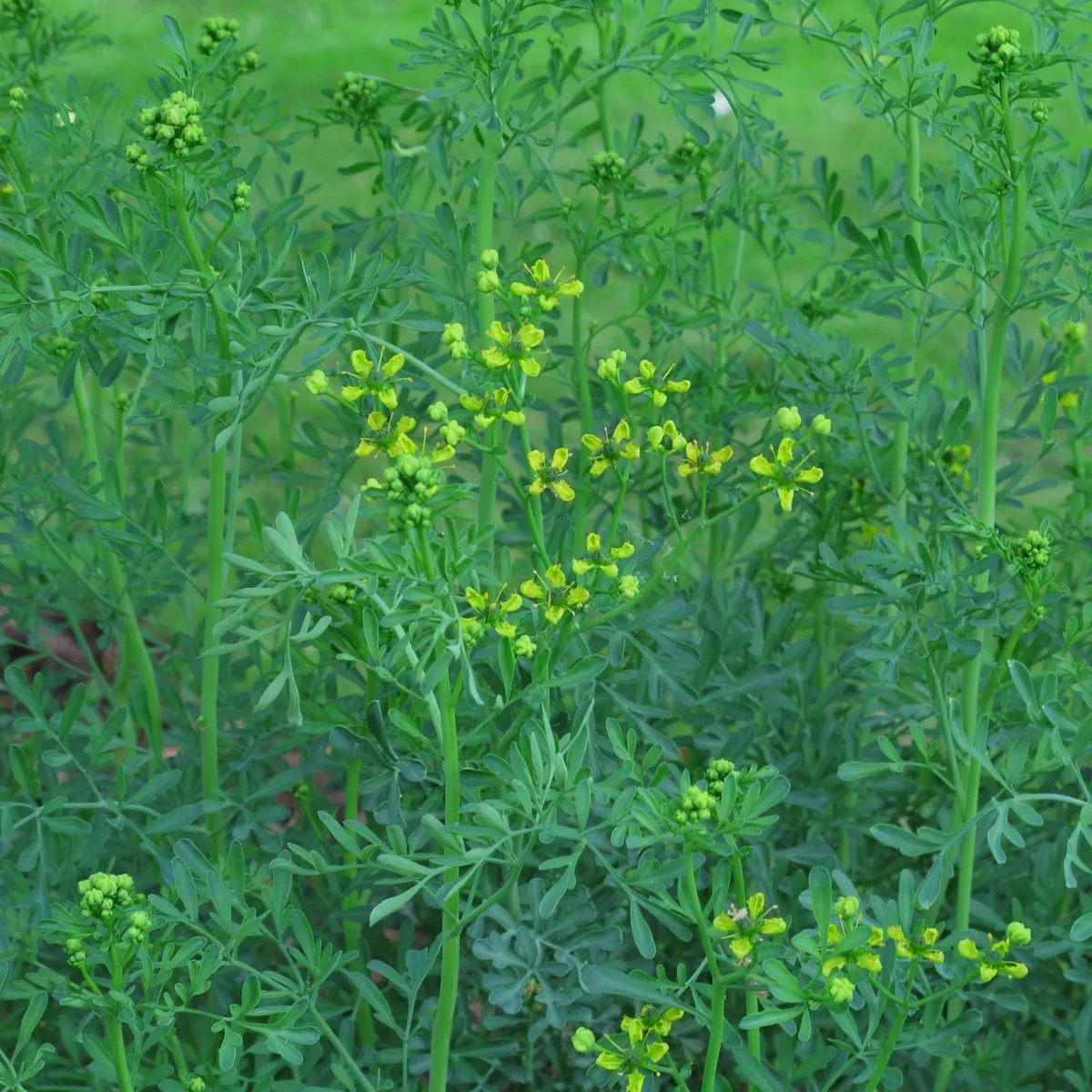
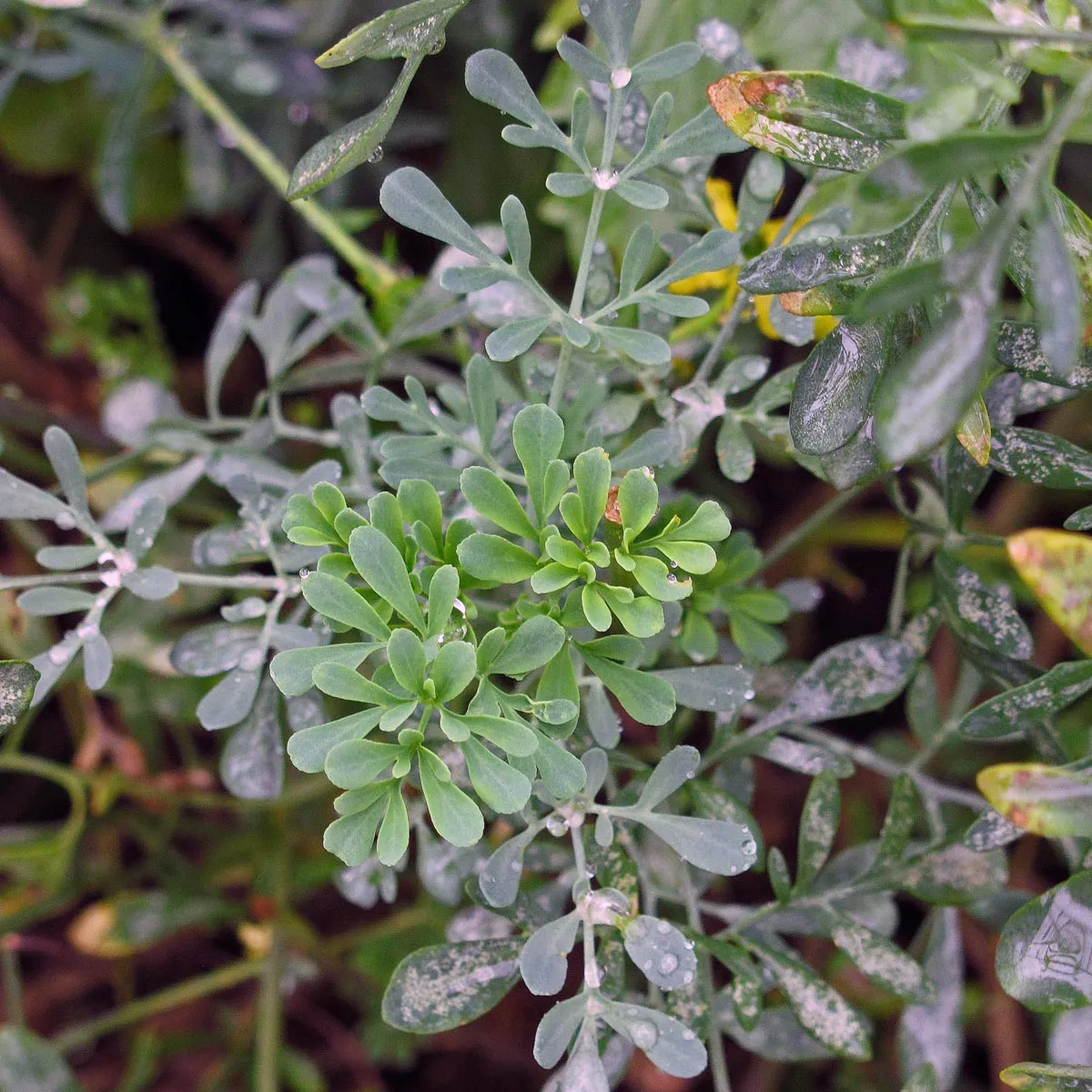
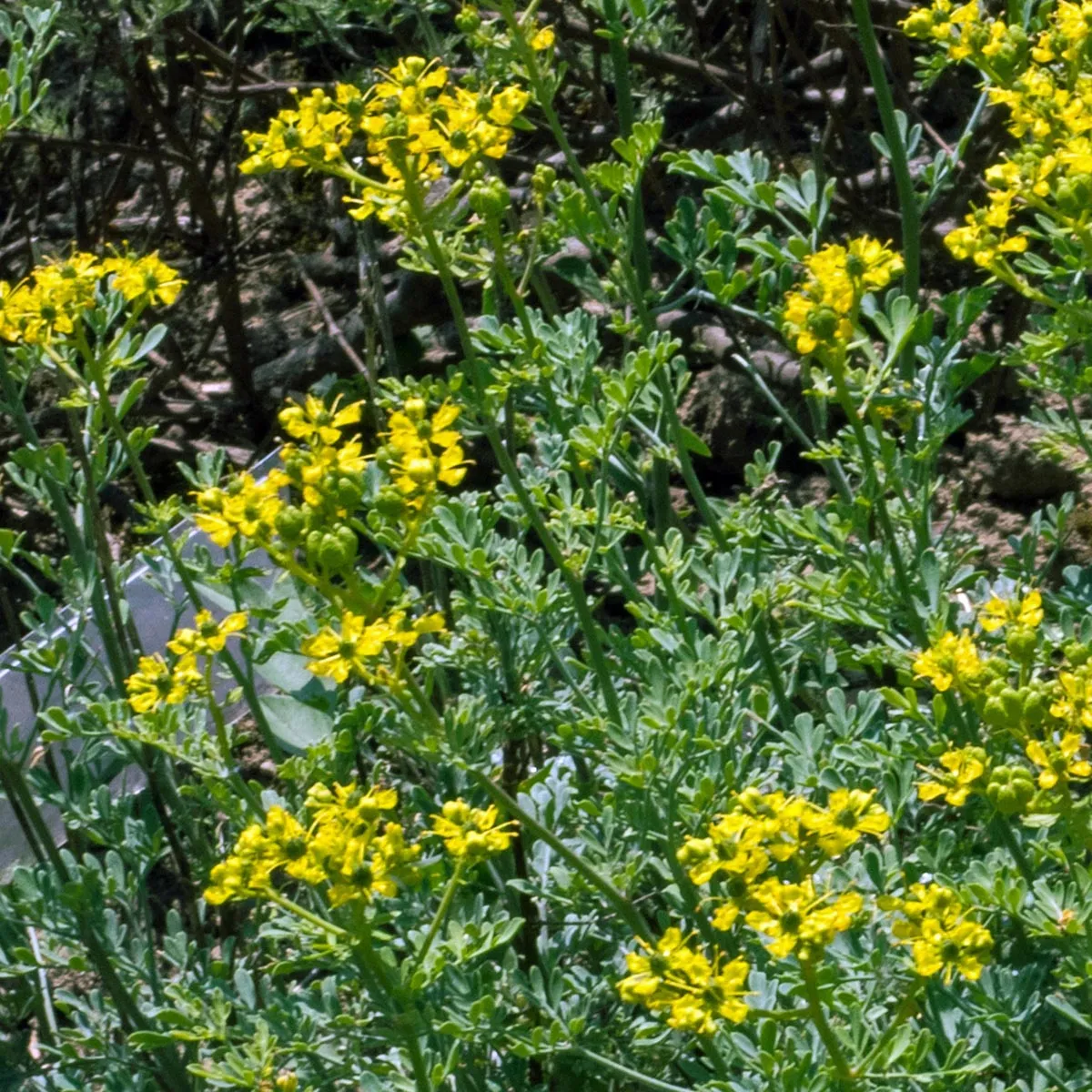
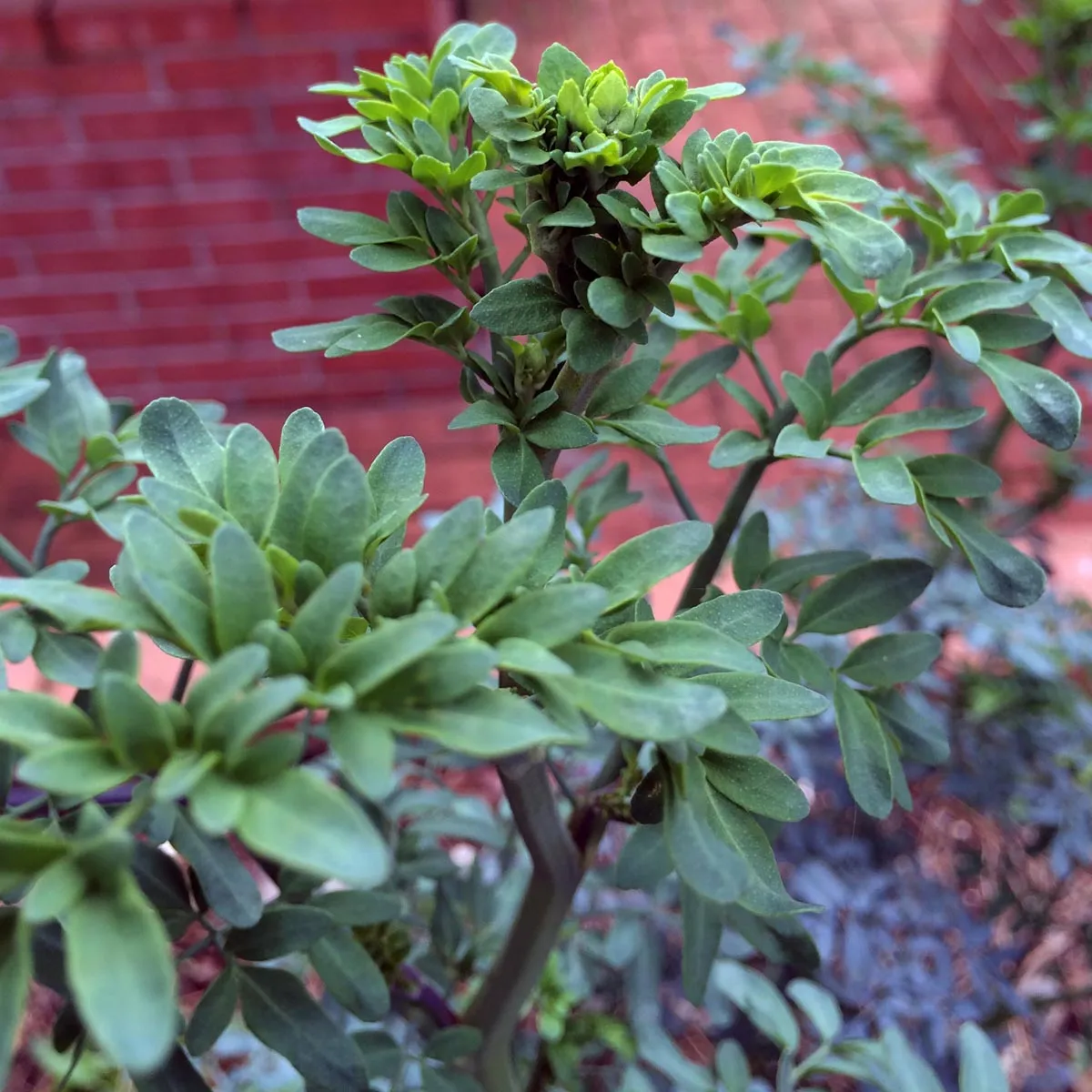
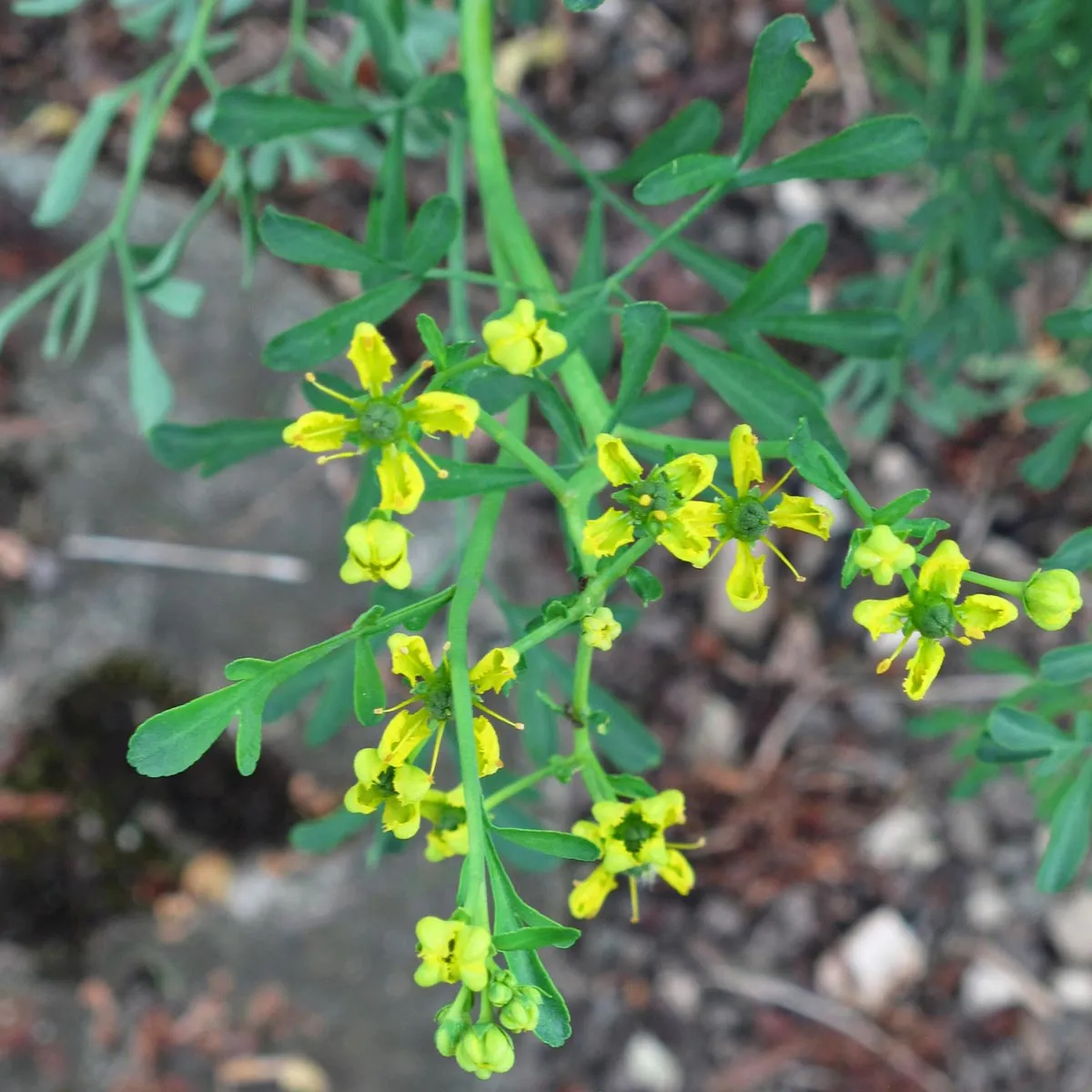
Ruda (Ruta graveolens) semillas
- Ein in der Antike sehr beliebtes Würz- und Heilkraut, das heute fast in Vergessenheit geraten ist. Sehr eigenwilliges, süsslich-weinartiges Aroma, das gut zu Fisch und Wild passt.
- Contenido: Aprox. 200 semillas
- Variedad de reproducción estable, capacidad de germinación comprobada periódicamente
Precio normal:
2,59 €
Número de producto: RUT01 GTIN: 4250601203706
Descripción
This particular spice is used in the kitchen in very small quantities, for example for fish soups. The sweet aromatic flavor of the common rue is difficult to describe because it can not be easily compared to any other spice. It also gives many Grappa preparations their characteristic aroma ('grappa con ruta'). In ancient Roman cuisine, rue was very popular, yet today the plant is a culinary rarity.
It has also been used in traditional medicine - both as a remedy, as well as for its abortifacient effect. In France, it was known as 'herbe à la belle fille' and, up to today, the legend has survived that, in Paris botanical garden, the common rue has to be fenced because young girls used to harvest and use it for abortion.
The epithet 'graveolens' already indicates the strong scent of the plant - indeed, the scent of a common rue planted in the garden can have a deterrent effect on cats and help to keep them away from certain places.
Ficha de la planta
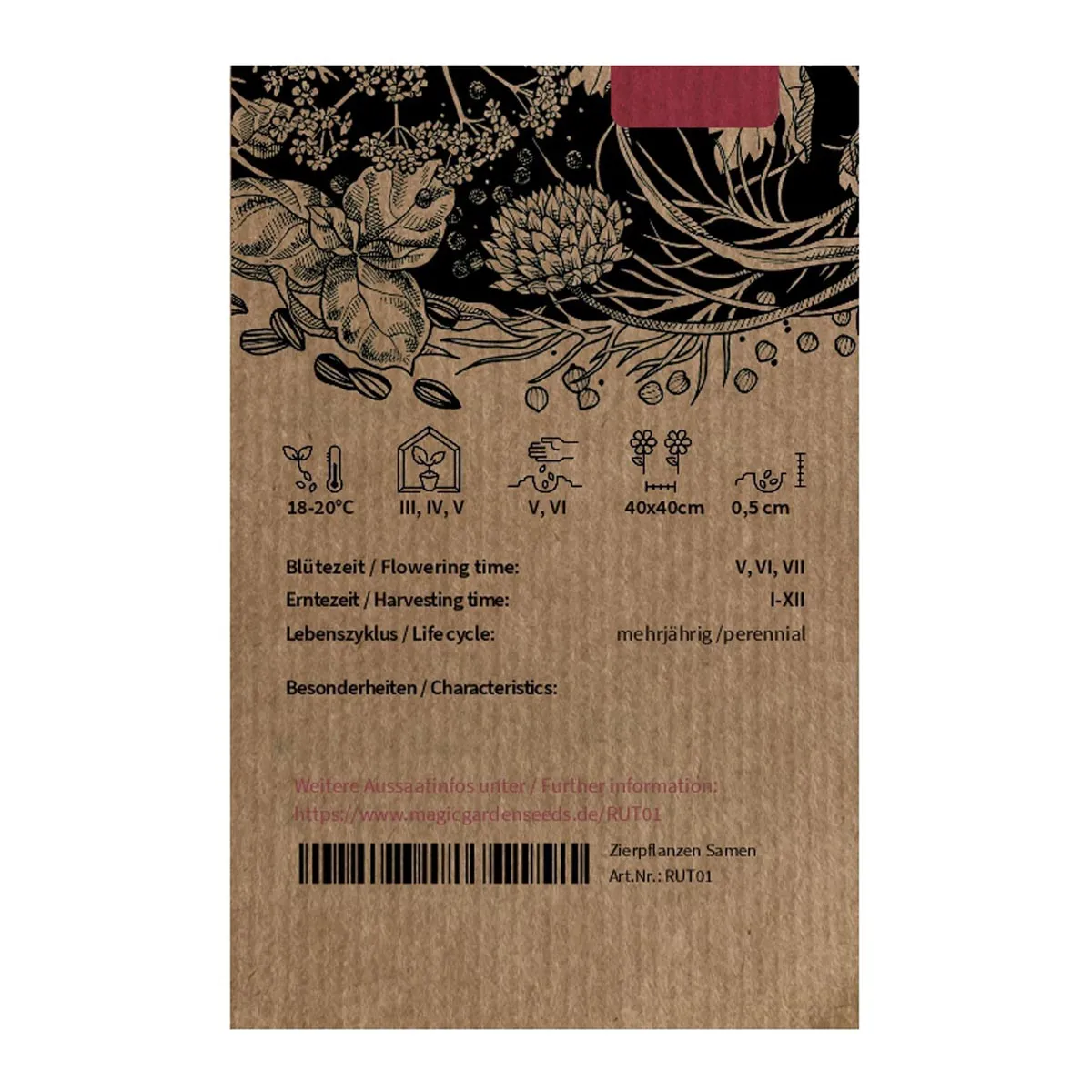
| Ciclo de vida | Perenne |
|---|---|
| Género | Rutaceae |
| Altura de crecimiento | 10-100 cm |
| Color de la flor | Amarillo |
| Floración | Julio, Junio, Mayo |
| Cosecha principal | Todo el año |
Consejos de cultivo
| Tiempo de siembra al aire libre | Junio, Mayo |
|---|---|
| Profundidad de siembra | 0.5 cm |
| Temperatura de germinación | 15-20°C |
| Periodo de germinación | 2-3 semanas |
| Luz solar | Pleno sol |
| Distancia entre plantas | 40 cm |
| Distancia entre hileras | 40 cm |
Siembra y cuidado
La ruda necesita luz para germinar, así que no se deben cubrir las semillas con tierra. La semilla germina dentro de 1-3 semanas, en pre-cultivo, en una bolsa para semillas, a 20°C. Las plántulas deben trasplantarse a macetas pequeñas y plantarse en exteriores después de las últimas heladas, a una distancia aproximada de 30-40 cm. La Ruta graveolens crece muy bien en un lugar soleado, con suelo rico en nutrientes, permeable y no muy húmedo.
La ruda común se auto siembra después de un periodo de floración y se puede esparcir de forma irregular, bajo buenas condiciones de crecimiento. Al podar o remover la planta, usar siempre guantes o proteger la piel -en combinación con la luz solar, la ruda puede causar irritación severa de la piel y dermatitis.
La ruda común se auto siembra después de un periodo de floración y se puede esparcir de forma irregular, bajo buenas condiciones de crecimiento. Al podar o remover la planta, usar siempre guantes o proteger la piel -en combinación con la luz solar, la ruda puede causar irritación severa de la piel y dermatitis.
Otros nombres
Nombre botánico: Ruta graveolens, R. hortensis
Alemán: Gertrudenkraut, Gnadenkraut, Kreuzraute, Totenkraut, Edelraute, Gartenraute, Augenkraut, Augenraute, Pfingstwuttel, Weinkraut
Inglés: herb-of-grace
Francés: rue vineuse, rue des jardins, herbe à la belle fille
Valoraciones
Iniciar sesión
Aún no hay opiniones. ¿Escribirás la primera?