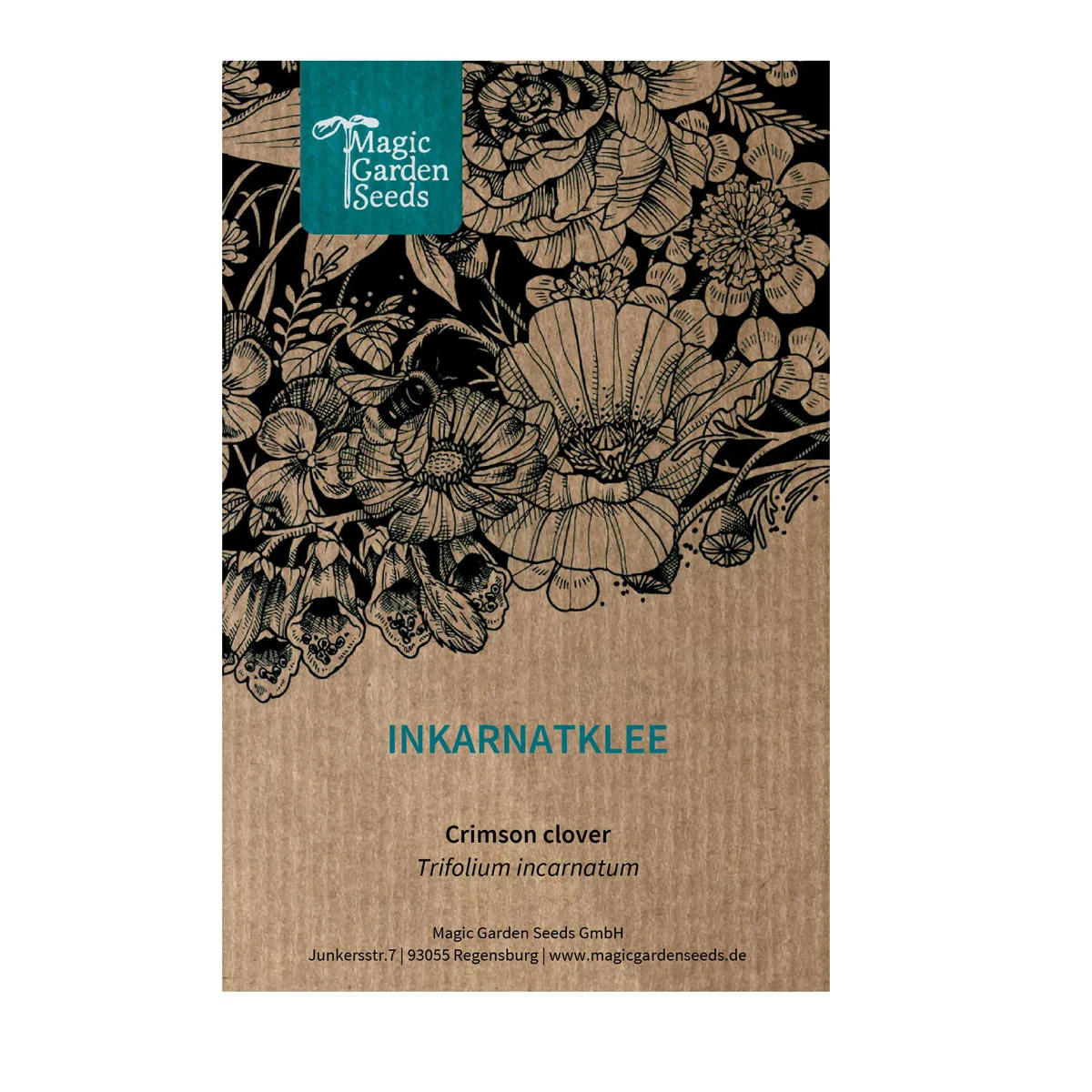
Trébol encarnado (Trifolium incarnatum) semillas
- Intensely red-flowering legume – both decorative and ecologically valuable.
- Natural green manure – improves soil structure and enriches nitrogen levels.
- One packet (20g) covers approx. 10 m² – high-yielding and easy to sow.
2,59 €
Descripción
Bright red-flowering legume for green manure, soil improvement and as a valuable forage plant for bees.
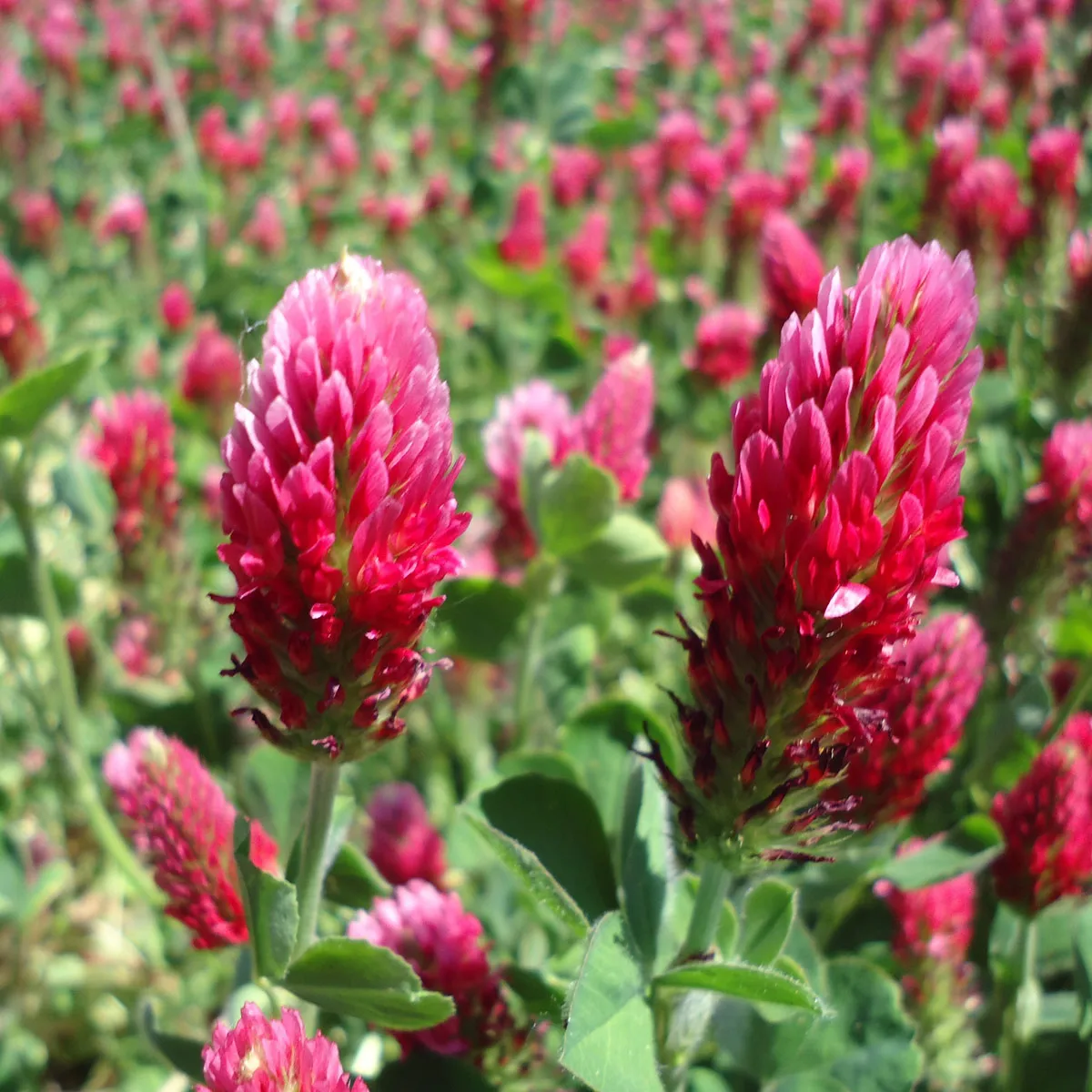
Crimson clover (Trifolium incarnatum) is a striking red-flowering clover native to the Mediterranean region and is one of the most popular green manure crops in wildlife-friendly gardening. It has been cultivated in Europe since the 18th century—initially as a forage plant and later valued for its soil-enhancing properties. With its dense, carmine-red flower spikes, it adds interest to beds, meadows and fields, while also serving as an excellent nectar source for bees.
As a legume, crimson clover enriches the soil with nitrogen, supporting long-term improvement of soil structure. It suppresses weeds, protects against erosion, and supplies valuable organic matter when worked into the soil as green manure. Its early flowering in spring provides an important food source for pollinators before many other plants begin to bloom.
Use in raised beds
Crimson clover is ideal for enriching the substrate in raised beds during summer or autumn. Its bright red flowers add colour to the bed and attract insects. After flowering, the plant material can be incorporated as natural green manure, helping to maintain the fertility of the raised bed in the long term. An easy-to-grow and visually appealing catch crop for sustainable garden care.
Ficha de la planta
| Identificación | Flor silvestres |
|---|---|
| Uso | Abono verde, Buen alimento para insectos |
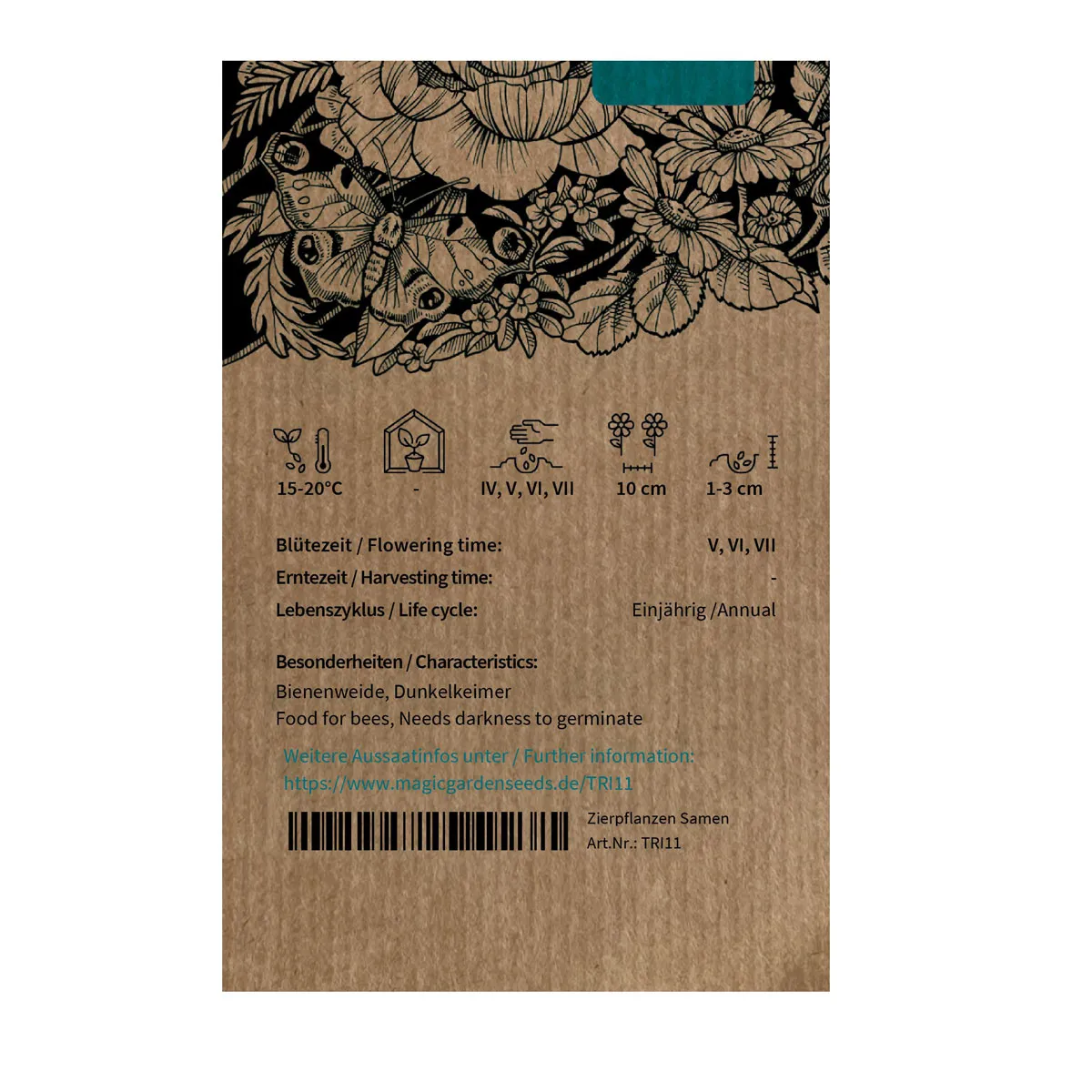
| Ciclo de vida | Anual |
| Género | Fabaceae |
| Propagación de semillas | Producción convencional |
| Región de origen | América del Sur, Región del Mediterráneo |
| Características | Germina en la oscuridad, Pasto para abejas |
| Altura de crecimiento | 20-60 cm |
| Color de la flor | Púrpura, Rojo |
| Floración | Julio, Junio, Mayo |
| Sistema de raíces | Raíz de grifo, Raíz profunda |
Consejos de cultivo
| Tiempo de siembra al aire libre | Abril, Julio, Junio, Mayo |
|---|---|
| Profundidad de siembra | 1-3 cm |
| Temperatura de germinación | 15-20°C |
| Periodo de germinación | 1-2 semanas |
| Clima | Moderado |
| Tipo de suelo | Bajo en cal, Humus, Moderado en nutrientes, Permeable |
| Luz solar | Pleno sol |
| Demanda de agua | Bajo, Sin encharcamientos |
| Distancia entre plantas | 10 cm |
Siembra y cuidado
Sowing & Care
Sow directly outdoors from April to July. Sow the seeds approximately 1–2 cm deep in loose, humus-rich soil and press down lightly. Crimson clover prefers sunny locations and thrives even in poor soils. Consistent moisture during germination supports even growth. This easy-care plant grows quickly and forms dense stands, making it well suited as ground cover.
Note on contents: One packet (20g) covers approx. 10m².
Otros nombres
Nombre botánico: Trifolium incarnatum
Alemán: Inkarnatklee, Italienischer Klee, Rosenklee, Blutklee
Inglés: Crimson clover, Italian clover, Incarnate clover,
Francés: Trèfle incarnat, Trèfle rouge d’Italie, Trèfle cramoisi
Italiano: Trifoglio incarnato, Trifoglio rosso d’inverno, Trifoglio cruento
Español: Trébol encarnado, Trébol rojo de invierno, Trébol carmesí
Neerlandés: Inkarnaatklaver, Italiaanse klaver, Bloedklaver
Iniciar sesión